

Why Tulsa’s Built Environment Is Changing
Tulsa looks different than it did ten years ago.
The riverfront is more active. Public spaces are fuller. Community investment is showing up in visible ways across the city, from parks and bridges to healthcare facilities and gathering spaces.
That growth didn’t happen by accident. It came from organizations willing to invest in projects designed to serve people long-term, and construction partners willing to help bring those projects to life the right way.
Crossland’s Tulsa team has had the opportunity to work alongside city agencies, nonprofit organizations, park authorities, and tribal nations on some of the region’s most visible community-focused projects. Through that work, we’ve learned something important: building public and community spaces carries a different level of responsibility.
These projects are more than schedules and square footage. They become part of how people experience their city, neighborhoods, and daily lives for years to come.
For organizations planning civic and community-focused construction projects in Tulsa and across Oklahoma, choosing the right construction partner matters. Public-facing projects require more than technical capability. They require accountability, communication, problem-solving, and a team that understands the weight of what is being built.
What Community-Focused Construction Really Means
“Community-focused construction” is a phrase that gets used often in the construction industry. But once construction begins, the real meaning shows up in the day-to-day decisions made on the job site.
For us, it starts with understanding that the people using the finished project are just as important as the owner hiring us to build it.
Whether it’s a public park, pedestrian bridge, healthcare facility, school, or community center, the work affects real people long before ribbon cutting day. That changes how we approach scheduling, safety, communication, traffic coordination, noise control, and overall project management.
It also means being honest when challenges happen.
Public construction projects are complex. Weather delays happen. Material lead times shift. Existing site conditions create surprises. What matters is how a construction partner responds when those challenges show up.
Our teams focus on solving problems early, communicating clearly, and keeping projects moving forward without losing sight of the bigger purpose behind the work.
Community-focused construction also means being a good partner outside the fence line. Our project teams attend neighborhood meetings, coordinate closely with stakeholders, and work to minimize disruption for nearby residents and businesses whenever possible.
We also prioritize relationships with local subcontractors and trade partners because we believe construction projects should strengthen local communities and local economies, not simply build within them.
Gathering Place: Building One of Tulsa’s Most Recognized Public Spaces
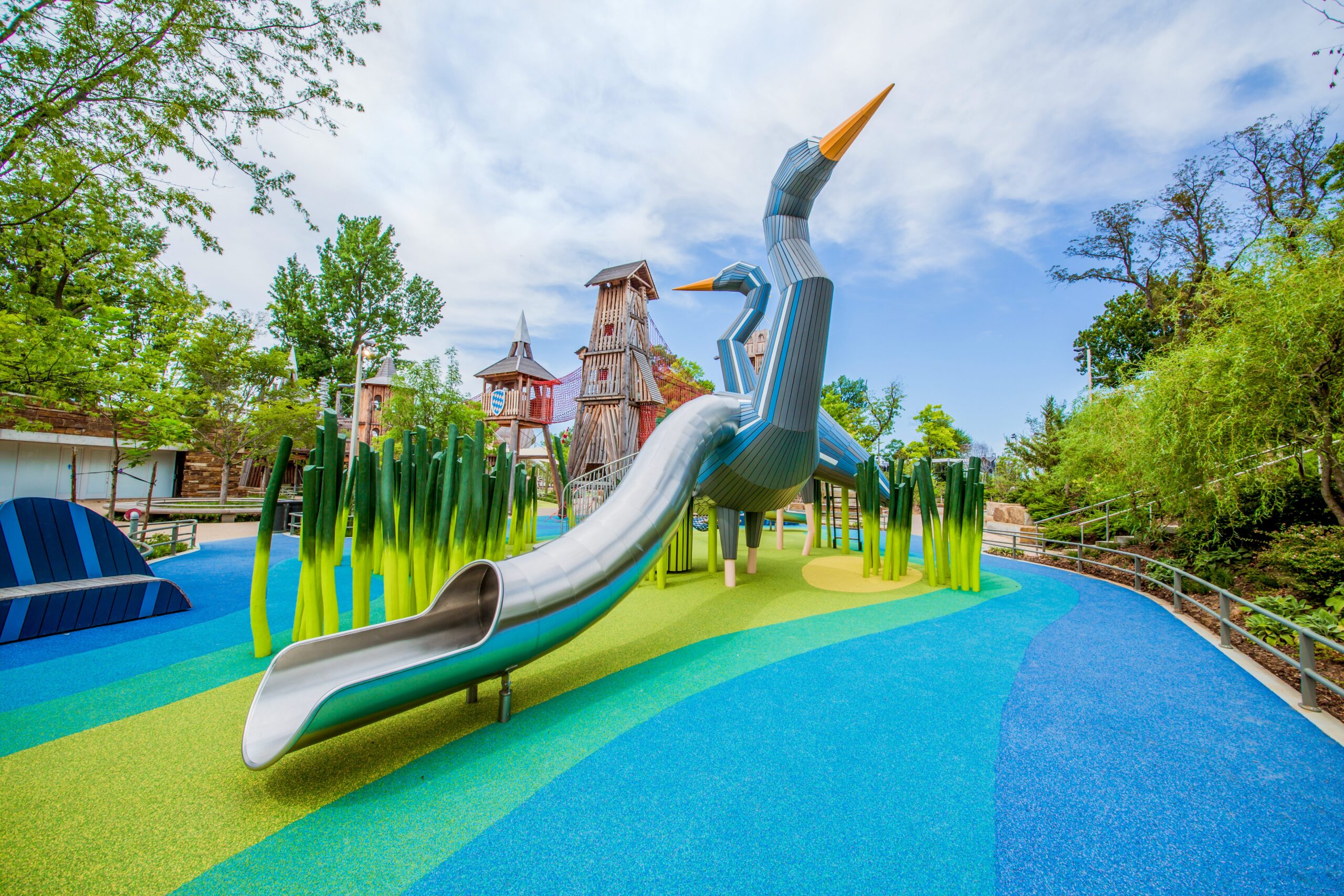
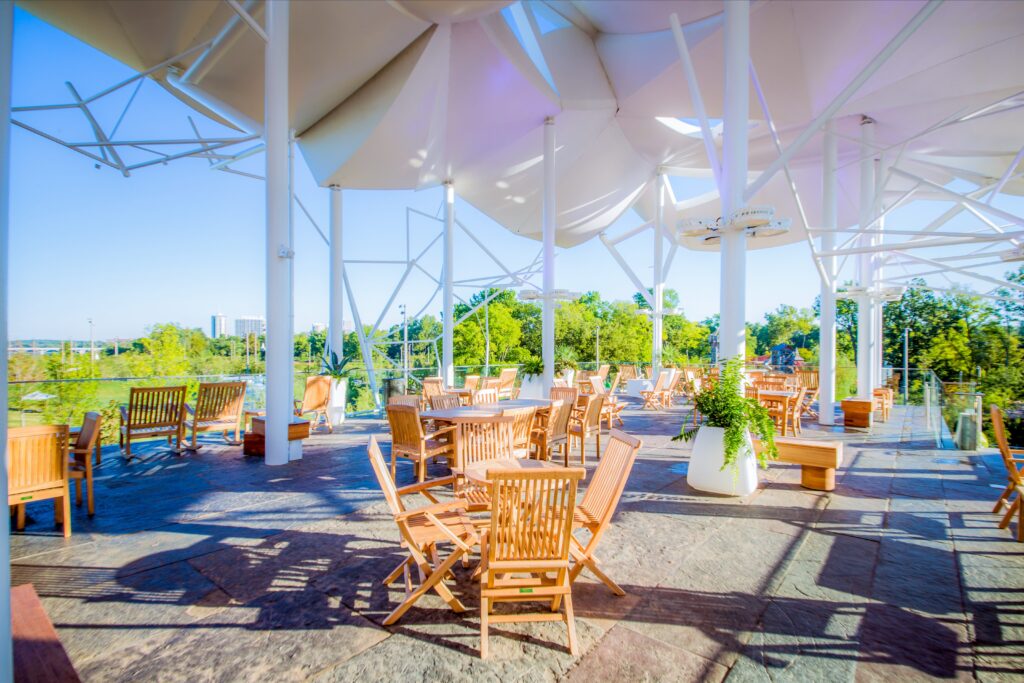
Gathering Place is one of the most recognized public park projects in the United States and one of the most impactful community investments Tulsa has ever seen.
The 66.5-acre park along the Arkansas River opened in 2018 and quickly became a destination for families, visitors, schools, and community events. Time magazine later named it one of the World’s Greatest Places and most recently USA Today ranked it No. 3 Best City Park.
But projects of that scale do not come together easily.
When Crossland Construction became involved, the project was facing major budget concerns and an uncertain path forward. Our Tulsa team worked alongside the George Kaiser Family Foundation, landscape architects at Michael Van Valkenburgh Associates, and a large network of trade partners to help reorganize the project approach, improve cost control, and establish a firm completion plan.
From there, the project required years of coordination, field leadership, and problem-solving.
At peak activity, between 150 and 500 workers were on site daily. Crews moved more than 400,000 cubic yards of material from the Arkansas River, built six miles of pathways, constructed multiple bridge structures, and coordinated work across an active and highly complex site.
The project required constant communication between field teams, subcontractors, suppliers, and design partners to keep work progressing safely and efficiently.
Flooding, weather delays, and logistics challenges all became part of the process. Our teams adapted in real time to keep the project moving forward while maintaining quality expectations and schedule goals.
Gathering Place ultimately opened on time and within budget parameters. The project earned an Excellence in Construction Award from Associated Builders and Contractors and permanently changed how Tulsa thinks about public space and community investment.
For our team, the project reinforced an important lesson: when a city places its trust in a project, the construction process matters just as much as the final product.
Williams Crossing: Complex Infrastructure with Community Impact
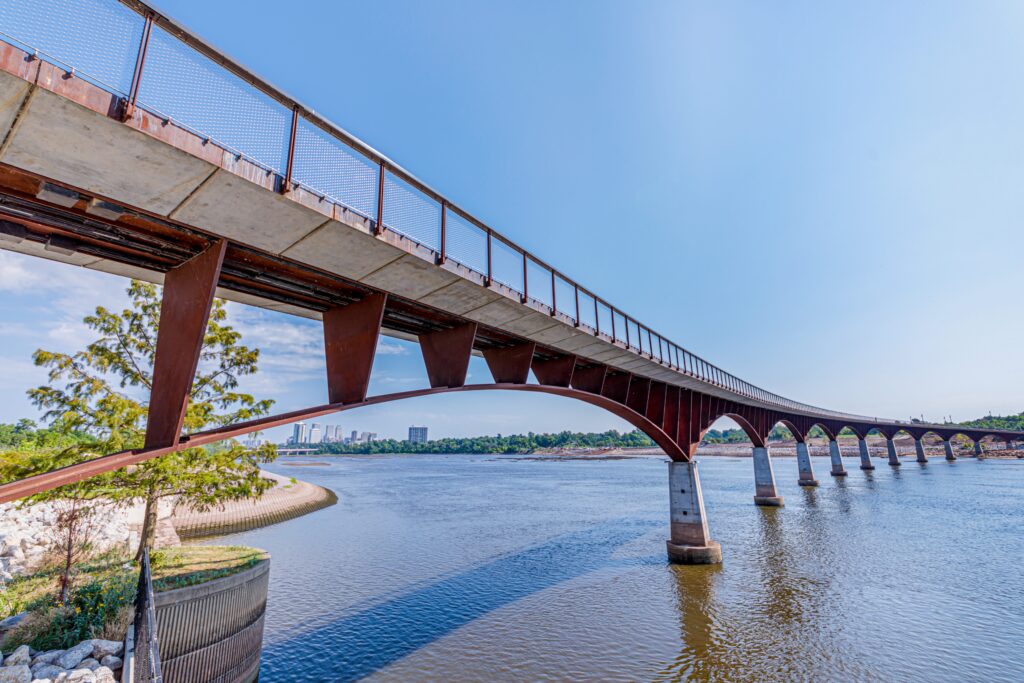
The Williams Crossing pedestrian bridge quickly became one of Tulsa’s newest landmarks after opening in 2024.
Stretching 1,440 feet across the Arkansas River, the bridge connects Gathering Place to Tulsa’s west bank trail systems and public spaces. Beyond its engineering complexity, the project reflects Tulsa’s long-term investment in connectivity, recreation, and public access along the riverfront.
The construction process required nearly four years of coordination.
Crossland managed demolition of the previous pedestrian bridge, coordinated work surrounding Zink Dam improvements, and constructed the new crossing while keeping surrounding public areas operational and accessible.
The project itself was highly technical. The bridge features eleven 120-foot steel arches weighing approximately 210,000 pounds each and utilized a steel plate fabrication system not previously used in the United States for this type of pedestrian bridge.
That meant extensive collaboration between engineers, fabricators, field teams, and project partners throughout construction.
Portions of the foundation and landing work required crews to operate directly within the Arkansas River. Decorative stone elements required specialized installation coordination, including helicopter placement for portions of the work.
Projects like Williams Crossing demand more than construction manpower. They require planning, communication, scheduling discipline, and experienced field leadership capable of solving problems in real time.
They also require understanding the bigger purpose behind the work.
The bridge was designed to help connect Tulsa residents more directly to the riverfront, trail systems, parks, and surrounding community spaces. Today, it serves not only as infrastructure, but as a public gathering space and visual landmark for the city.
Supporting Tulsa Beyond the Job Site
Community involvement extends beyond construction projects at Crossland.
Through Crossland Cares, our Tulsa team regularly partners with local organizations, nonprofits, and volunteer initiatives that directly support the communities where we live and work.
Our employees have volunteered alongside the Food Bank of Eastern Oklahoma to help package and distribute thousands of pounds of food for local families. Team members also support programs including the Salvation Army Adopt an Angel Program, the Tulsa Heart Walk, local schools, and community-focused volunteer events throughout the year.
We’ve partnered with Make-A-Wish Oklahoma on several things, the most recent was a young boy recovering from leukemia, dreamed of spending a day on a construction site after watching equipment operate outside his hospital window during treatment. Our Tulsa team welcomed him on site with custom signage, a hard hat, construction activities, and a day built entirely around his experience.
Moments like that matter to our people because they reflect something deeper than project delivery. They reflect a culture built around showing up for the communities we are part of.
For us, community investment is not a campaign or marketing initiative. It is simply part of being a good partner and neighbor.
Partnering with Tribal Nations, Nonprofits, and Public Agencies
Community-focused construction in Oklahoma often involves a diverse mix of stakeholders, including city agencies, nonprofit organizations, park authorities, tribal nations, and healthcare providers.
Each project comes with different priorities, approval processes, and community expectations. Successfully navigating those projects requires flexibility, communication, and relationship-driven leadership.
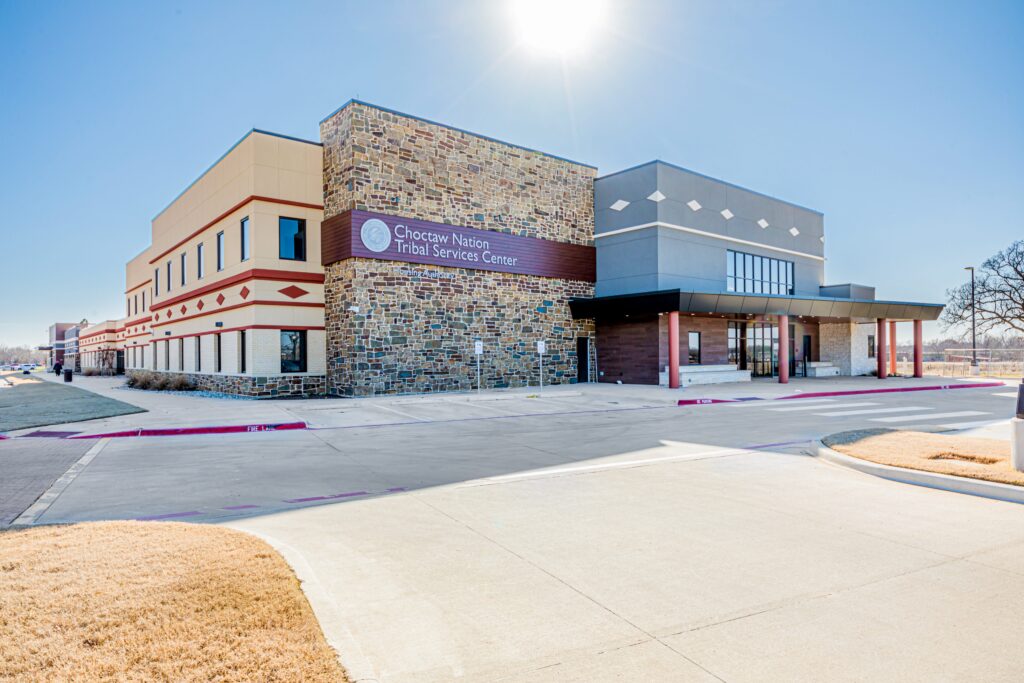
Crossland Construction has partnered with tribal nations across Oklahoma on projects ranging from healthcare facilities to community spaces and administrative buildings.
The Choctaw Nation trusted Crossland with expansion work for their Tribal Services Center in Hugo, Oklahoma. The Cherokee Nation partnered with Crossland to construct the Salina Clinic, a 112,000-square-foot healthcare campus serving Native American communities throughout the region. Crossland also completed renovation work for the Quapaw Nation community center through a design-build delivery process with strict budget and schedule requirements.
Every tribal project comes with its own goals, processes, and community priorities. Our teams understand the importance of listening first, communicating clearly, and respecting the leadership and decision-making structure of each tribal nation we work alongside.
That same mindset applies to nonprofit and municipal projects.
Public projects often involve longer planning cycles, multiple stakeholder groups, community meetings, and increased public visibility throughout construction. Our teams are experienced in helping navigate those environments while maintaining transparency, accountability, and progress throughout the life of the project.
Why Community Investment Projects Matter Long-Term
Well-executed community projects create long-term value far beyond the construction phase.
Public parks, healthcare facilities, pedestrian infrastructure, schools, and civic spaces strengthen communities by improving access, increasing connectivity, supporting economic growth, and creating places where people want to spend time.
Tulsa’s investment along the riverfront is a clear example. Projects like Gathering Place and Williams Crossing have helped attract visitors, encourage additional development, and reshape how residents experience the city.
For municipalities, nonprofits, and community organizations, that impact matters. Successful projects help build trust, strengthen future investment opportunities, and create momentum for additional growth.
The contractor involved becomes part of that long-term outcome.
That responsibility is something we take seriously because these projects are designed to serve communities for decades. The work completed during construction directly affects safety, durability, maintenance, usability, and long-term performance.
Community-focused construction also plays an important role in workforce development across Oklahoma and the broader construction industry.
As skilled labor demand continues to grow, construction companies have an opportunity to help create career pathways for future tradespeople through workforce development, apprenticeship opportunities, and industry training programs.
Strong communities require strong infrastructure, but they also require strong people and long-term investment in the workforce that builds it.
Building Tulsa’s Future Together
Tulsa continues to invest in projects designed to strengthen the community for future generations.
Those projects require construction partners capable of managing complexity, communicating clearly, solving problems quickly, and staying accountable from preconstruction through final completion.
Crossland is proud to help build projects that serve communities across Tulsa, Oklahoma, and the surrounding region.
From public parks and pedestrian bridges to healthcare facilities and community-focused developments, our teams understand the responsibility that comes with high-visibility public projects and the importance of building them the right way.
If your organization is planning a civic, nonprofit, tribal, healthcare, or community-focused construction project, we would welcome the opportunity to start a conversation early and help explore the best path forward.
Contact Crossland Construction’s Tulsa Division to learn more about partnering on your next project.
Latest News
