
PROJECT DELIVERY METHODS
Start With The
Right Approach.
Crossland has experience across traditional and collaborative delivery approaches. We help owners understand the options, weigh what matters most, and choose an approach that supports their project goals from the start.

ENR Top 400 Contractors
Ranked
#47
Metal Building Erector
Ranked
#20
In-House
Self‑Performance Capabilities
Workforce
2000+
Employees
In-house
Equipment Fleet
Different Structures
Same Goal:
A Successful Project.
Different approaches change how contracts are structured and when the project team comes together. Crossland works across all of them.
Selecting the Right Method
What Drives Your
Delivery Method
The right delivery method depends on more than project type. These are some of the factors we consider with owners when determining the best path forward.
Key Factors to Consider
Schedule
How quickly does the project need to move? Is the completion or opening date fixed?
Budget + Cost Clarity
When do you need reliable cost information, and how much flexibility does the budget allow as the project develops?
Project Complexity
Would early builder or trade partner involvement help address technical, logistical, phasing, or constructability challenges?
Collaboration
How early do you want the owner, designer, and builder working together?
Owner Resources + Decision-Making
How involved does your team want to be, and how quickly can project decisions be made?
Procurement Requirements
Do public funding, organizational policies, or other requirements dictate how the project must be procured?
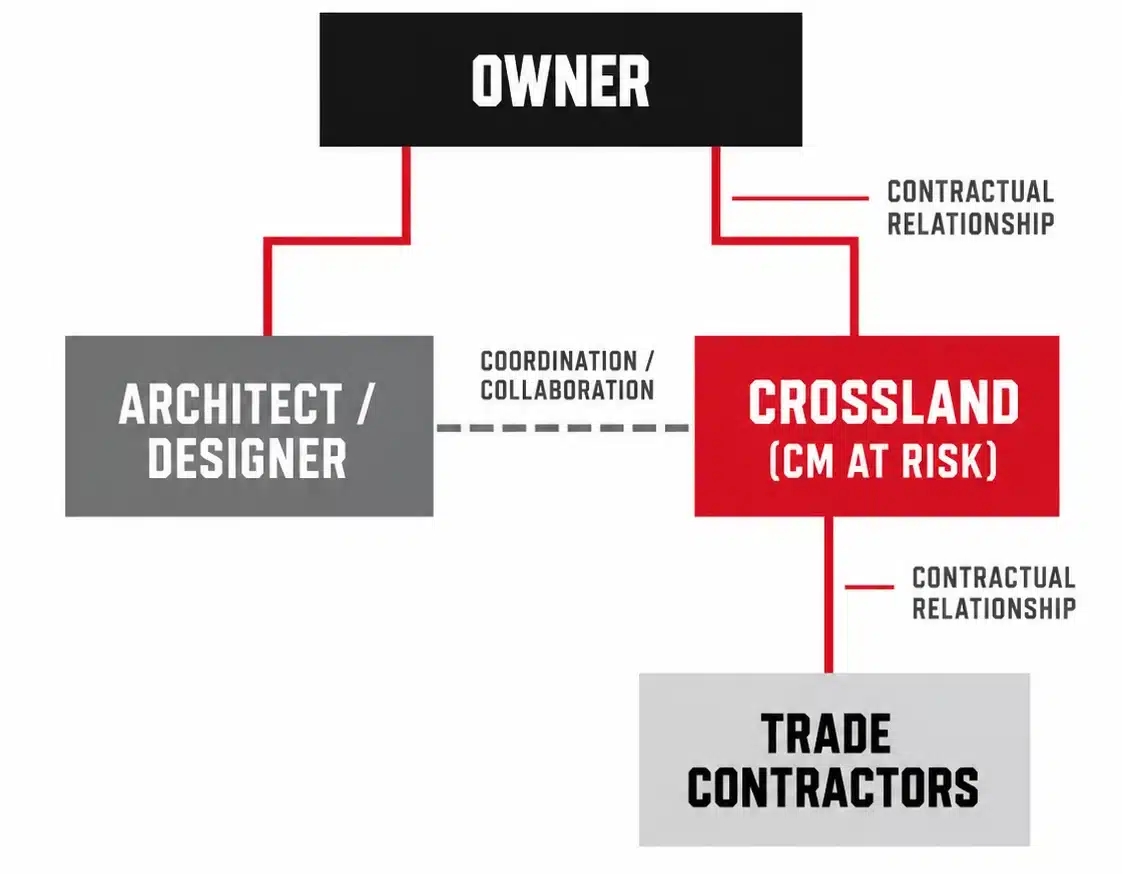
Early collaboration helps shape better decisions.
With CMAR, the owner contracts separately with the designer and construction manager. Crossland joins the team during design to provide cost, schedule, constructability, procurement, and logistics input, then serves as the at-risk builder during construction.
Why Owners Choose CMAR
- Early contractor involvement
- Cost + schedule feedback during design
- Collaboration during design
- Early procurement advantages
- Logistics and phasing planning
Best Fit When
- Builder input is valuable during design
- Complex phasing or logistics
- Schedule is a priority
- Budget alignment is important
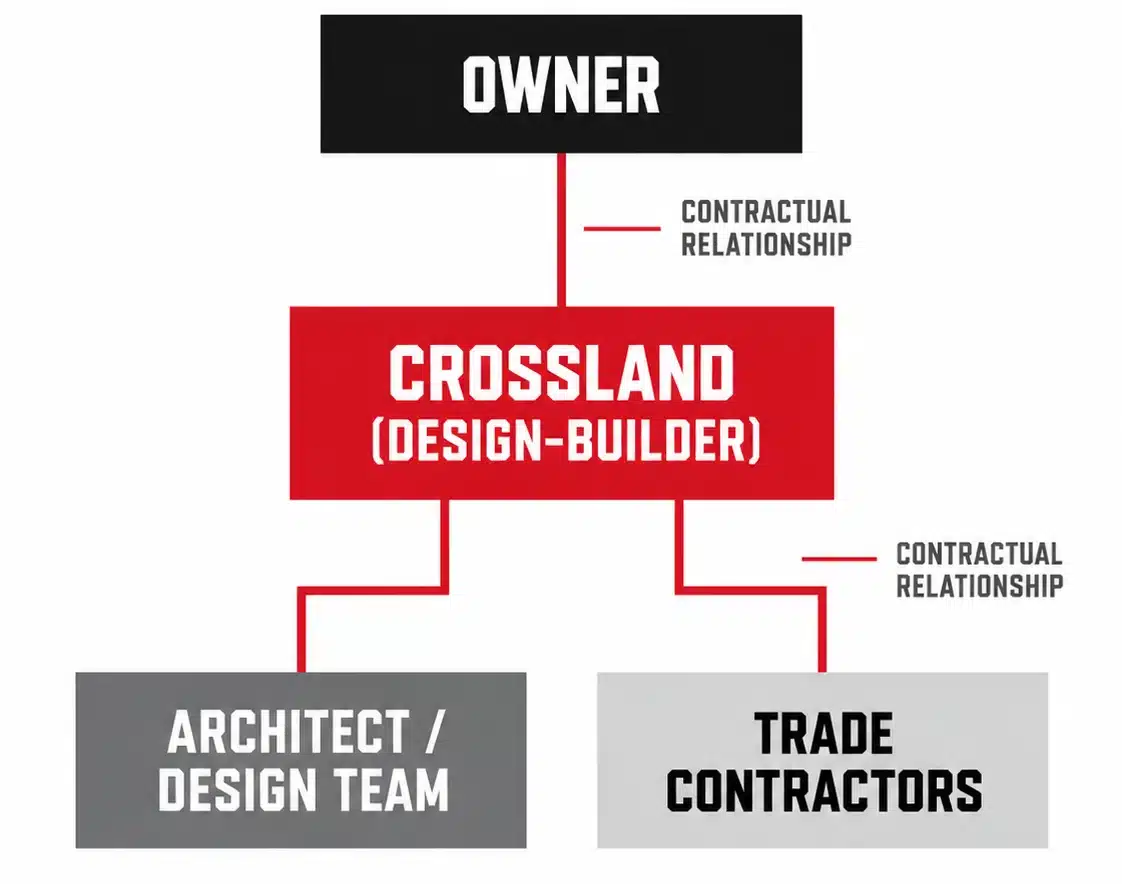
A streamlined process from concept to completion.
Design-Build brings design and construction together under one contract with a single point of responsibility. The integrated structure reduces handoffs, streamlines communication, and allows design and construction planning to move forward together.
Why Owners Choose Design-Build
- Single-source accountability
- Integrated design + construction team
- Earlier construction input
- Potential to accelerate delivery
- Simplified communication
Best Fit When
- Speed to market matters
- Project goals are clearly defined
- An integrated team is preferred
- The project benefits from early collaboration
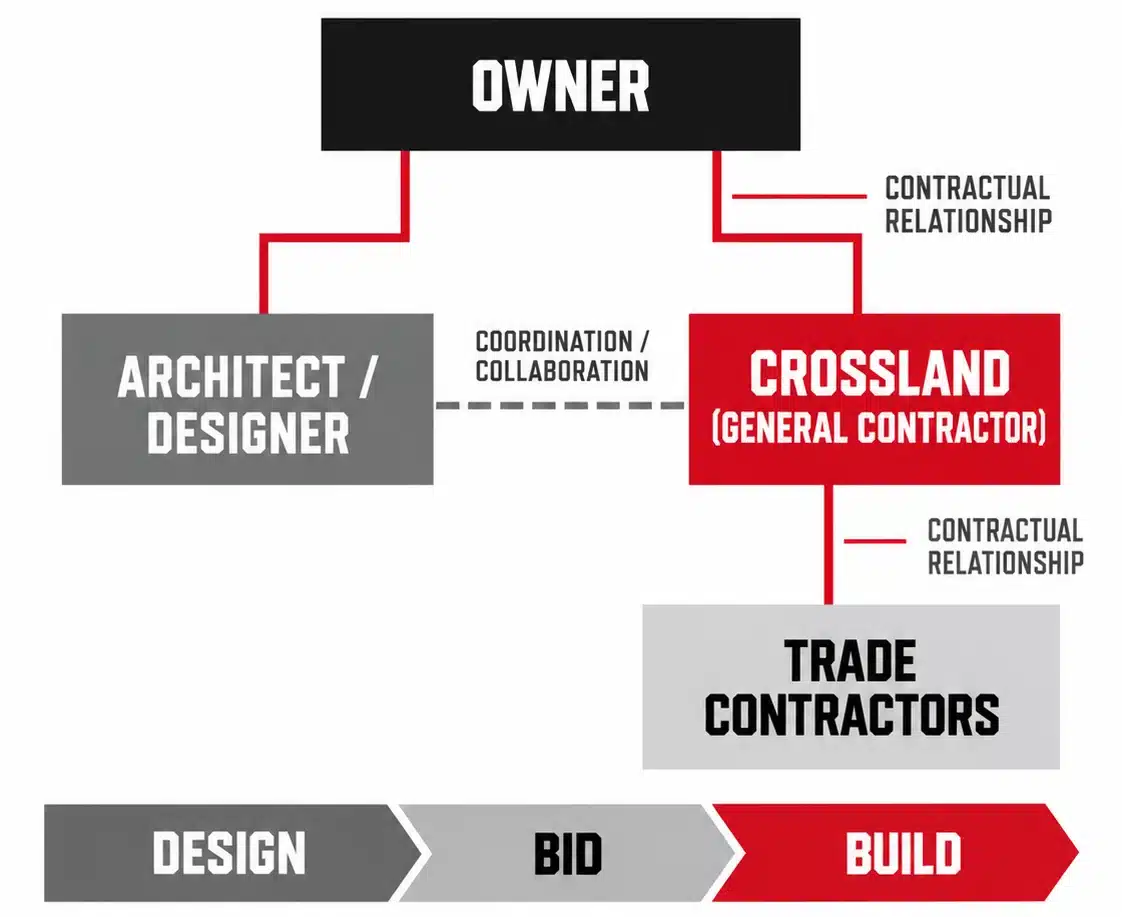
A familiar approach with a clear separation of design and construction.
In Design-Bid-Build, the owner contracts separately with the designer and builder. The design is completed first, then contractors competitively bid the construction work, a process commonly known as a “hard bid,” and the owner selects a builder.
Why Owners Choose Design-Bid-Build
- Direct control of the design process
- Clearly defined plans + specifications
- Competitive construction pricing
- Side-by-side comparison of bids
- Established procurement process
Best Fit When
- Design is complete before bidding
- Scope is clearly defined
- Traditional procurement is required
- Competitive pricing is a priority
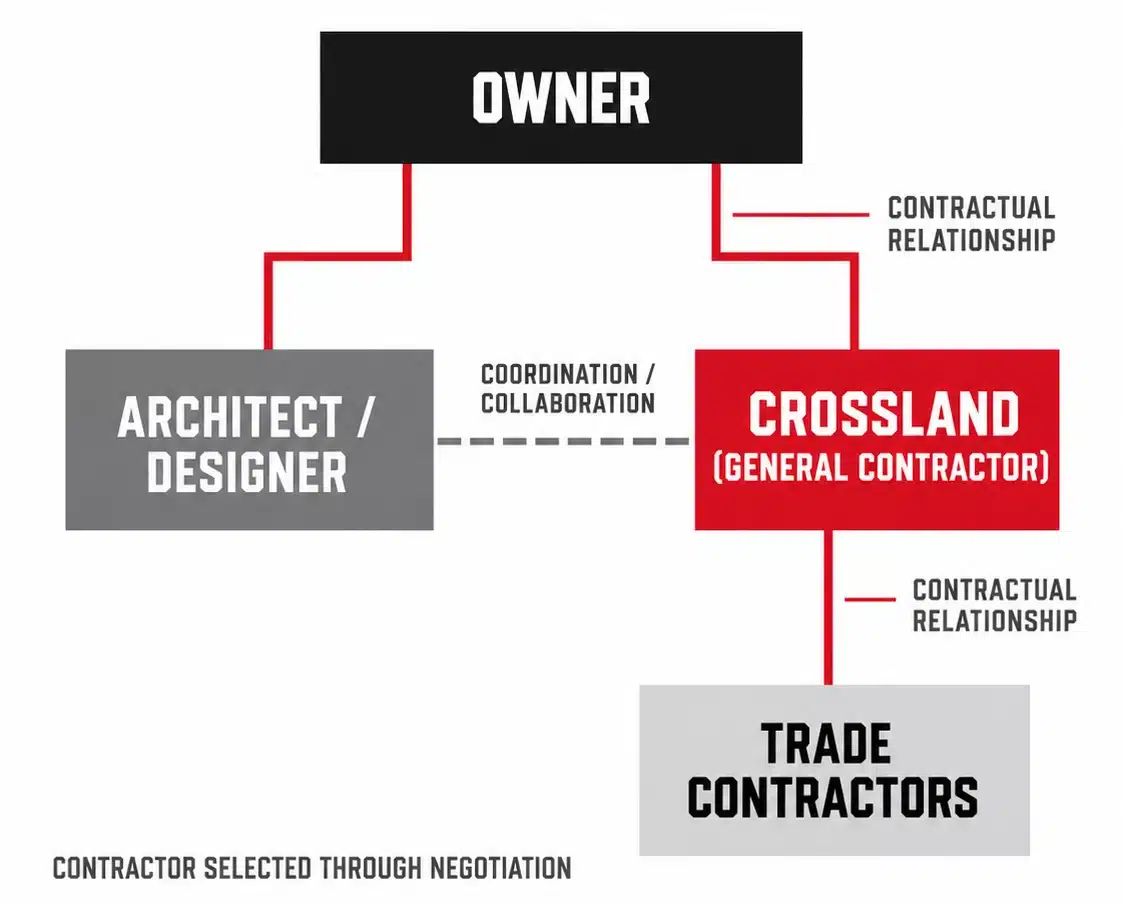
A negotiated approach allows the owner to select Crossland based on experience, qualifications, team fit, and project understanding, not solely on initial construction price. When selected during design, Crossland can also contribute to planning, cost, schedule, constructability, procurement, and project-specific challenges before construction begins.
-
Phase 1
Select + Align the Team
The owner selects Crossland based on qualifications, fit, and project understanding.
-
Phase 2
Plan, Price + Build
The team aligns on scope, pricing, schedule, and expectations before moving into construction.
Why Owners Choose It
- Contractor selection based on qualifications + fit
- Collaborative planning
- Flexibility as the project develops
- Early builder involvement when selected early
- Direct communication + transparency
Best Fit When
- Qualifications + team fit matter
- Pricing benefits from collaboration
- Clear expectations are a priority
- Procurement requirements allow negotiation
Delivery Method 05
Progressive Design-Build
Infrastructure Delivery.
Explore Crossland Heavy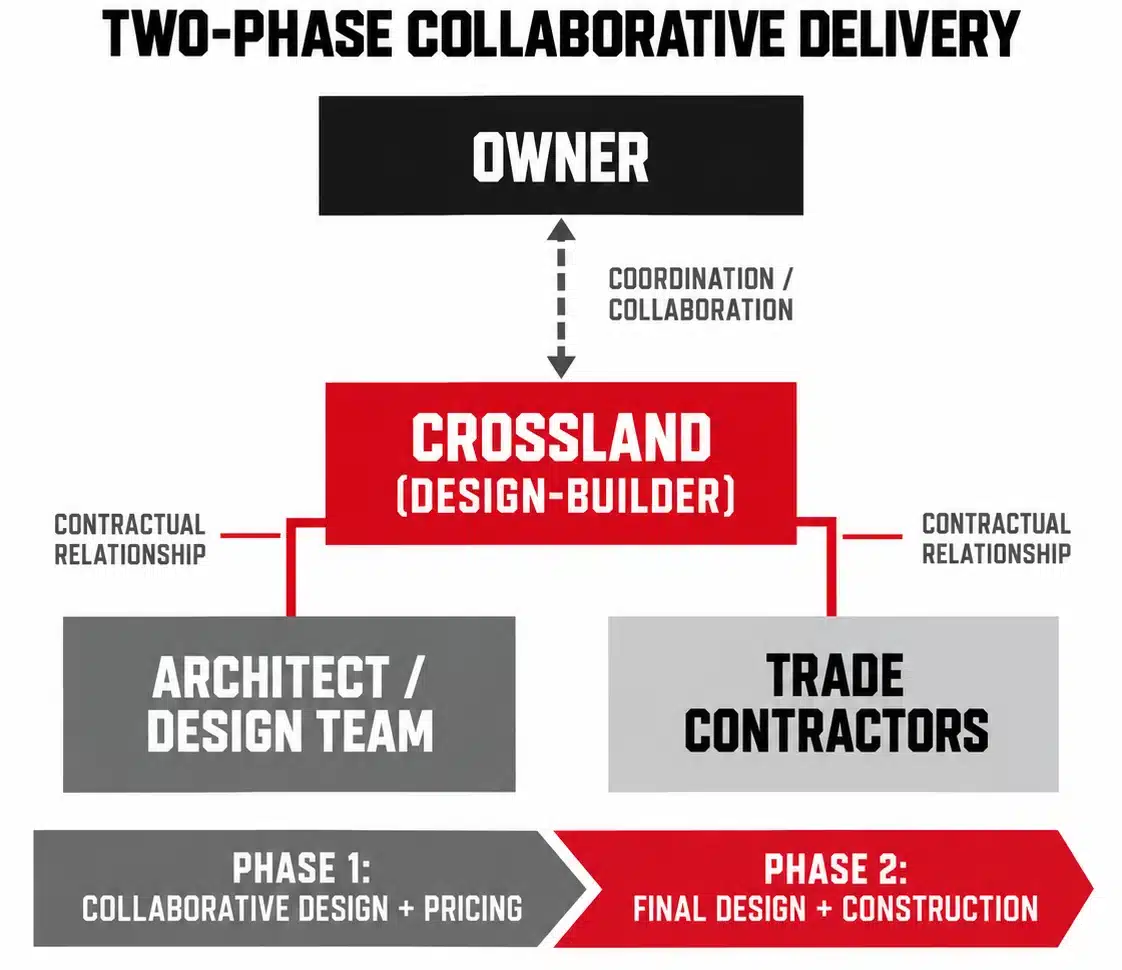 View larger
Progressive Design-Build is a collaborative form of Design-Build in which the owner selects the design-builder early, before the final design and construction price are established.
For water, wastewater, and heavy civil infrastructure projects, Crossland Heavy Contractors brings Progressive Design-Build experience that brings the owner, engineer, and builder together early to develop the project collaboratively.
-
Phase 1
Collaborate + Validate
Owner, engineer, and builder work together to advance the design, scope, schedule, pricing, and project risks before the final construction price is established.
-
Phase 2
Construct
Once the team agrees on scope, price, schedule, and commercial terms, the project moves into construction.
During Phase One, The Team Works To
- Develop and evaluate design solutions
- Investigate existing conditions
- Refine project scope
- Identify and manage risk
- Build the project schedule
- Develop + validate pricing
- Evaluate constructability and phasing
Best Fit When
- Early collaboration matters
- Design or scope is evolving
- Schedule is a priority
- Early risk management is valuable
The Crossland Difference
Methods Change.
Our Approach Doesn’t.
Different approaches change how contracts are structured and when the project team comes together. They don’t change what Crossland brings to the work.
Our estimators, preconstruction professionals, project managers, superintendents, and craft professionals bring practical construction experience to the decisions we make, connecting what’s planned on paper to what happens in the field.
Common Questions
MOST ASKED QUESTIONS
ON DELIVERY METHODS.
What is a construction project delivery method?
A project delivery method defines the contractual relationships between the owner, designer, and builder and determines how the team works together to design and construct a project.
Which construction delivery method is best?
There is no single best method for every project. Schedule, budget, project complexity, procurement requirements, owner resources, and desired level of collaboration should all factor into the decision.
What is the difference between CMAR and Design-Build?
In CMAR, the owner generally holds separate contracts with the designer and construction manager. In Design-Build, design and construction are brought together under a single contract. Both methods allow the builder to become involved earlier than a traditional Design-Bid-Build approach.
When should a contractor become involved in a project?
When the delivery approach allows it, bringing the contractor into the process during design allows estimating, scheduling, procurement, constructability, and field experience to influence decisions before construction begins.
Can Crossland help us select a delivery method?
Yes. You don’t need to have the delivery approach determined before starting a conversation with Crossland. We can help your team compare the options based on your goals, schedule, budget, procurement requirements, and project needs.
Not Sure Which Delivery Method Is Right?
You don’t need to have every answer before you call us. Tell us where your project stands, what matters most, and what challenges you’re trying to solve. We’ll help you understand the options and determine the approach that makes the most sense for your project.
Delivery options and procurement requirements may vary based on project type, funding source, jurisdiction, and applicable procurement rules.
Latest News
